
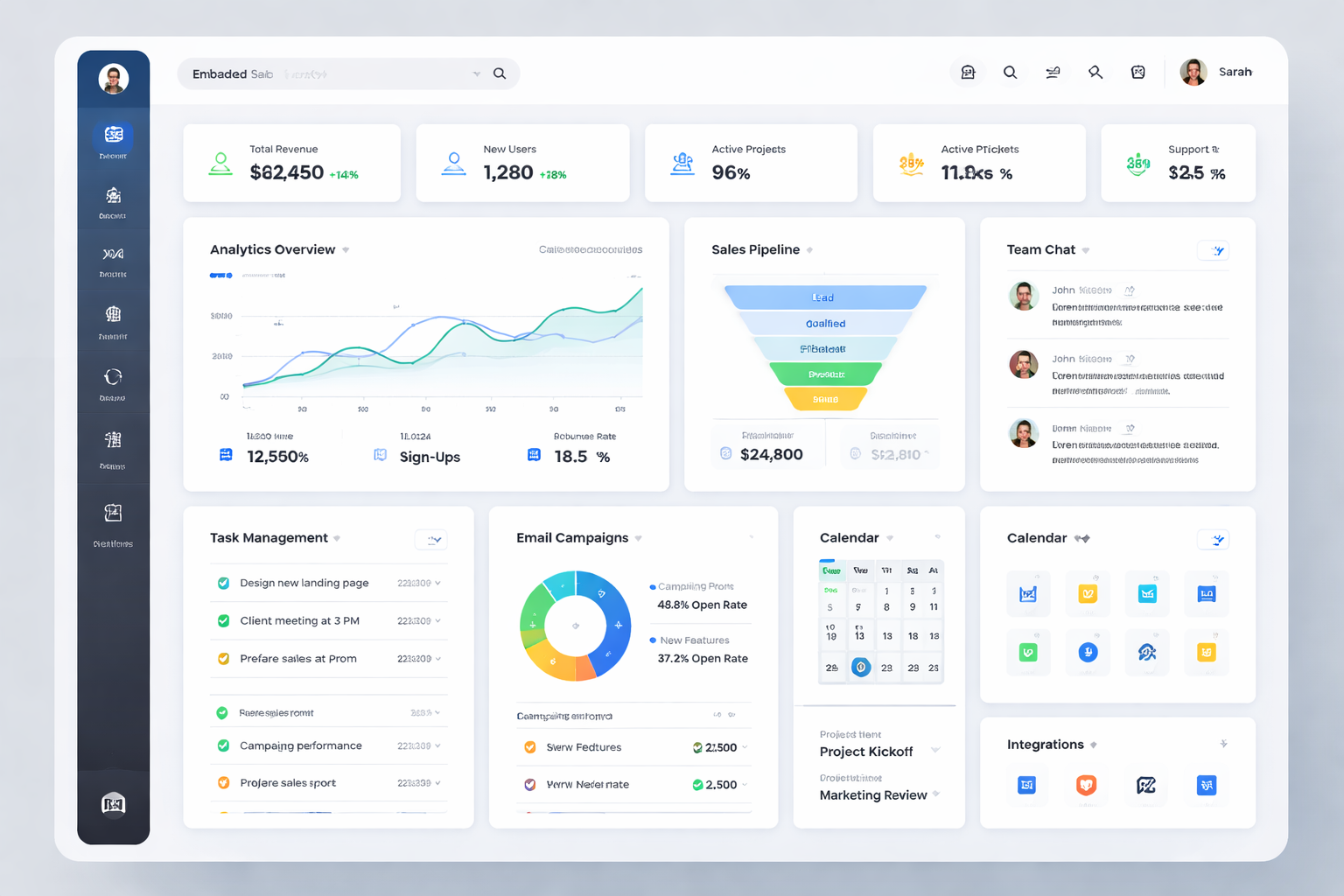
Embedded SaaS is quickly changing the way digital platforms work in 2026. Platforms are becoming full ecosystems instead of being mere service providers by integrating mighty software tools straight into their interfaces. This change is also helping businesses to provide customers with seamless user experiences, open up new sources of revenue and remain competitive in a saturated market.
Embedded SaaS What is Embedded SaaS?
Embedded SaaS is the concept of embedding the software functions in a system that allows users to access tools without exiting the system. It can be payments, analytics, CRM, and automation, all that is integrated into a single experience.
Important features of Embedded SaaS.
- The experience without the need to switch between a variety of platforms.
- Homegrown tools incorporated into user workflows.
- Customization features, specific to the user requirements.
- In-built advertisement features to platform creators.
- Data collection and analytics: Centralized.
The reason why Embedded SaaS is becoming popular.
- Users require integrated platforms as a convenience and its effectiveness.
- Companies desire to have more customer retention and interactions.
- Platforms want to find other sources of revenue other than core services.
- The decision making processes that rely on data need to be centralized in regard to data access.
- The competitive markets drive companies to give more value.
The way Embedded SaaS Works.
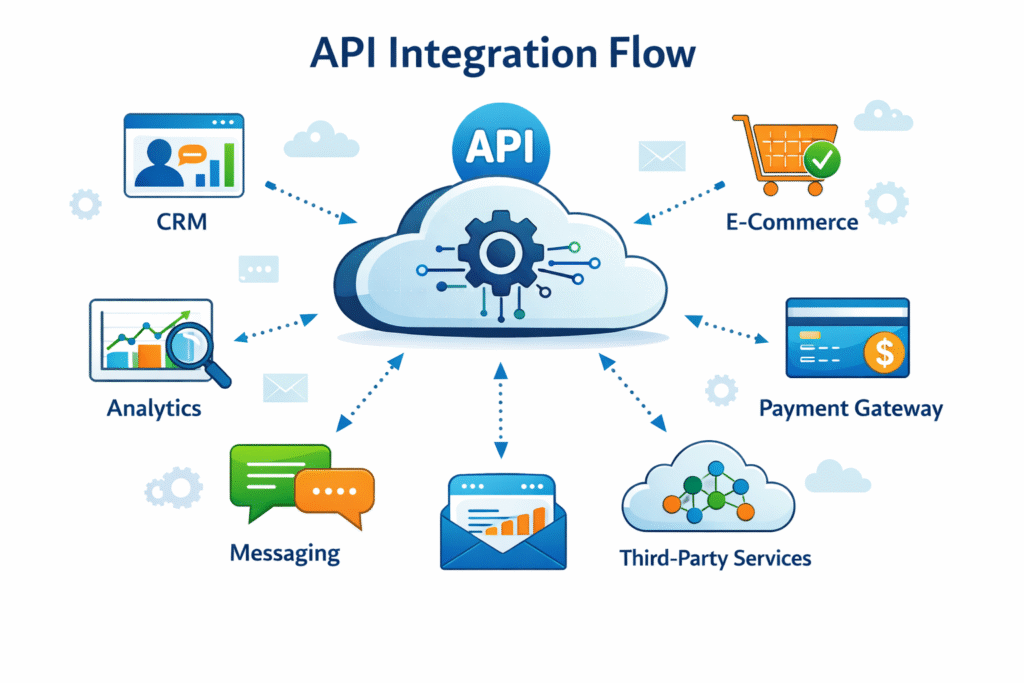
API-Driven Integration
Embedded SaaS is highly dependent on APIs (Application Programming Interfaces) as the means of linking various services. APIs are connectors through which platforms can connect third-party services such as payment systems, analytics, or communication facilities. This solution will make sure that the users will be able to enjoy various capabilities on one interface without inconveniences. It additionally enables companies to expand capabilities swiftly through the addition or alteration of integrations when necessary.
White-Label Solutions
White-label SaaS solutions allow businesses to adopt ready-made software and make it their own product. This implies that businesses do not have to develop complex systems. Rather, they are able to rebrand existing features and present them as native features. It has a great impact on the development time, cost and still offers a smooth experience to the end user.
Modular Architecture
Embedded SaaS platforms in the modern world rely on modular designs with features being constructed as separate modules. This allows one to easily add, delete or modify functionalities without compromising the whole system. Modular design enhances scalability and flexibility, enabling platforms to respond to the evolving user needs and market demands.
Embedded SaaS use cases in the real world.
Embedded SaaS is already gaining widespread adoption in industries, transforming the business operations and value delivery.
Fintech Platforms
Financial apps incorporate payment processing, lending, and financial analytics within their apps. This enables users to handle transactions, keep track of spending as well as access financial services without leaving the site.
E-commerce Platforms
E-commerce solutions combine inventory management, marketing automation and customer analytics in a single dashboard. This facilitates the work of the sellers and boosts decision making.
Workforce and HR Platforms.
Workforce management has become more efficient as payroll, attendance tracking and performance management are now contained in a single system within the HR platform.
Advantages of Embedded SaaS to Businesses.
- Enhances usability through decreased friction.
- Retain more customers and stickiness to the platform.
- Facilitates speedy deployment of features and innovation.
- Opens up new opportunities to monetize.
- Improves data insights to make better decisions.
Challenges of Embedded SaaS
Integration Complexity
The implementation of different tools into one platform can be cumbersome. Companies should make sure that various systems are compatible, and work well. Inadequate integration may result in failure of the system or poor user experience.
Security and Compliance.
The embedded systems must be very secure in dealing with sensitive user information. Companies should adhere to the rules of data safety and introduce such methods as encryption and safe authentication of user data.
Relying on Third-Party Services.
Most of the embedded capabilities are dependent on third parties. When these providers modify their prices, policies or cease services, it has a direct influence on the functionality and user experience of the platform.
Future of Embedded SaaS
Embedded SaaS has a bright future ahead with an increasing number of platforms becoming full-service ecosystems.
Vertical SaaS on the Rise.
Special tools that are niche-specific will be incorporated in industry-specific platforms. This will enable the businesses to provide very specialized solutions to problems that are unique to the industries.
Embedded AI-Powered features.
Embedded SaaS will be enhanced with artificial intelligence that will help automate, predict, and provide personalized user experiences. Smart and efficient platforms will be developed by AI.
Growth of No-Code and Low-Code
Non-coded and low-coded platforms will simplify the process of integrating software features into businesses without the need to possess a lot of development expertise. This will enhance innovation and enable the small companies to compete with the big companies.
Conclusion
Embedded SaaS is transforming the purpose of digital platforms into an ecosystem. When businesses build their interfaces with powerful tools directly in them, they are able to provide more value, enhance user satisfaction and unlock new growth opportunities. With the ever-changing nature of technology, the use of embedded SaaS will henceforth become a necessity to those companies that strive to remain competitive and up-to-date.
Frequently Asked Questions (FAQs)
1. What is the Embedded SaaS?
Embedded SaaS refers to the implementation of software applications within a platform which enables one to access various capabilities without having to move out of the system.
2. What is the value of Embedded SaaS in 2026?
It is significant as it enhances user experience, retention, and generates new revenue streams to businesses.
3. What are some ways of using Embedded SaaS by companies?
APIs, white-label solutions, and modular architectures are options that companies use to incorporate features into their platforms.
4. What are the key advantages of Embedded SaaS?
The major advantages are that it enhances user experience, accelerates innovation, generates a superior understanding of data and generates greater revenue.
5. What are the problems of Embedded SaaS?
Complexity of integration, security, and dependence on third-party service providers are some of the challenges.