
A New Frontier in Human-Machine Interaction.
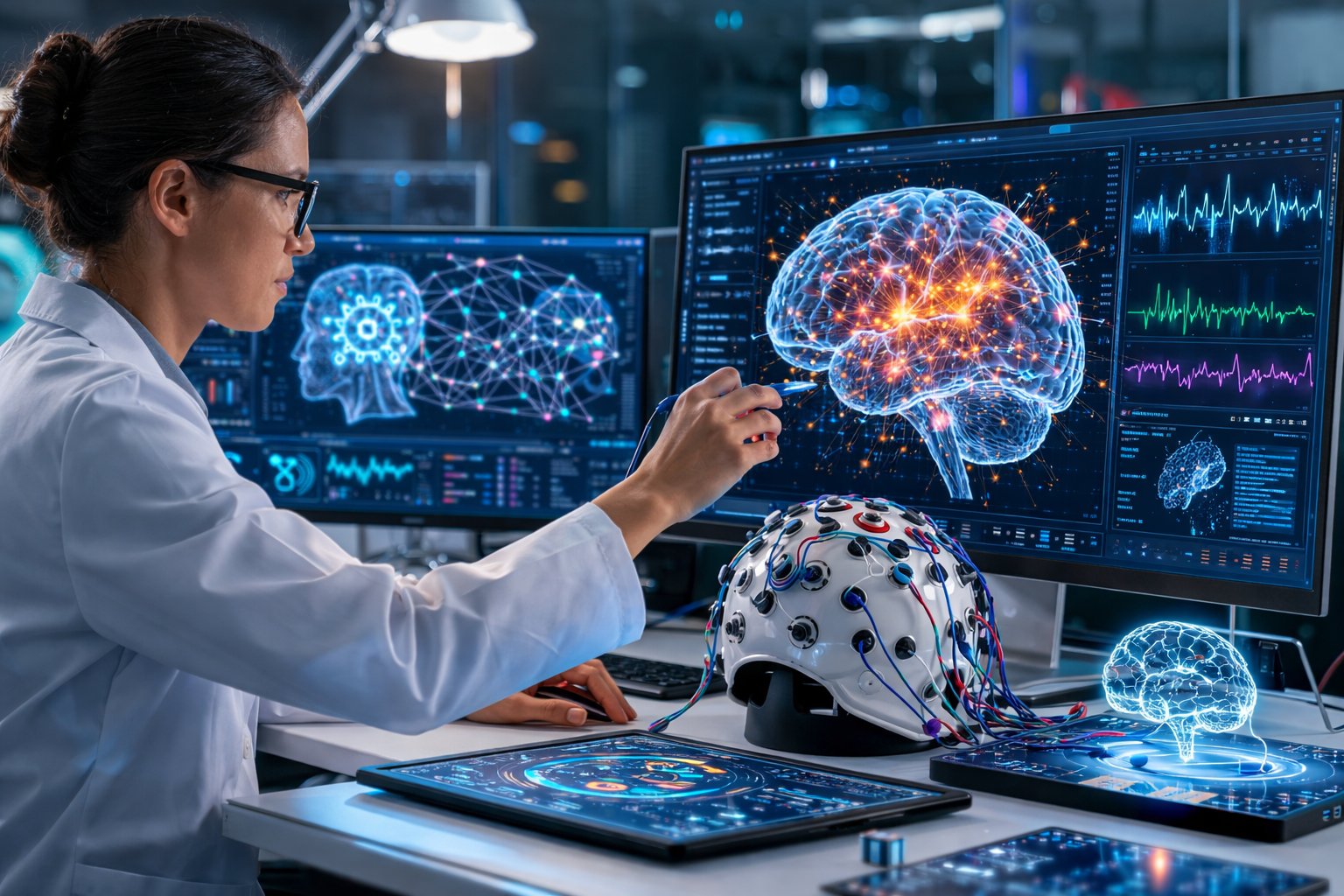
Brain-computer interfaces (BCIs) have become one of the most revolutionary technologies and advances in neuroscience. By establishing a direct communication channel between the human brain and external devices, BCIs enable people to manipulate machines with the help of their neural activity only. It is one of the largest steps toward human interaction with digital systems and machines.
The BCI technologies are currently being developed by researchers, engineers, and health practitioners all over the world to enhance medical treatment, recover lost functions, and also improve human-computer communication. With the ongoing development, Brain-Computer Interfaces are likely to become very instrumental in determining the future of the fields of healthcare, artificial intelligence, and even human-to-machine partnering.
Introduction to Brain-Computer Interfaces.
A brain-computer interface is a computer that records the brainwave and translates it into instructions that may operate some external device by way of a computer, robotic limb, wheelchair, or other computer-related tools. This technology can be explained through how it identifies electrical signals produced by neurons in the brain and interprets them into machine-readable data.
Generally, there are three main components of BCI. The former is signal acquisition; the neural activity is captured by sensors or electrodes. The second process is known as “signal processing,” in which algorithms are used to process the signals that are recorded in order to determine patterns that can be identified as particular intentions or thoughts. Last but not least, the understood messages are translated into instructions that enable the devices to work.
BCIs are applied in two major forms in research and development. Non-invasive BCIs involve sensors on the scalp to record signals from the brain without the need to undergo surgery. Such systems are less risky and simpler to install but can have low signal precision. An example of invasive BCIs is the insertion of electrodes directly in the brain, which enables a researcher to gain better signals of the neural activity and have better control of the devices.
The major characteristics of brain-computer interfaces.
- Direct communication: Machines with brain signals.
- Neural activity is used to control external devices.
- The integration with machine learning and artificial intelligence.
- Medical rehabilitation and medical assistive technology applications.
- Possible applications in games, virtual reality, and online communication.
- Rehabilitating and transforming healthcare.
Brain-computer interfaces are used in various fields, but one of the most important is the field of healthcare. BCIs have demonstrated significant prospects of assisting people who are physically very handicapped to be able to take control of the world around them and, therefore, enhance their life quality.
Patients with paralysis, spinal cord injuries, strokes, or neurodegenerative diseases are usually unable to communicate or move autonomously. This gap can be overcome through the use of BCI technology in which such individuals would be enabled to use brain signals to actuate assistive devices.
Indicatively, using BCIs, patients who are in clinical trials have been able to control robotic arms and computer cursors and type messages using neuromuscular signals. Others are even coming up with some advanced systems that are able to stimulate muscles or nerves and enable patients to partially move with the help of neural feedback.
To people with degenerative ailments like Amyotrophic Lateral Sclerosis (ALS), brain-computer interfaces provide a sign of hope that communication skills can be restored. BCI systems can enable patients to type or create synthetic speech by just thinking about it by decoding brain signals that are linked to speech or intention.
Artificial Intelligence in the Development of BCI.
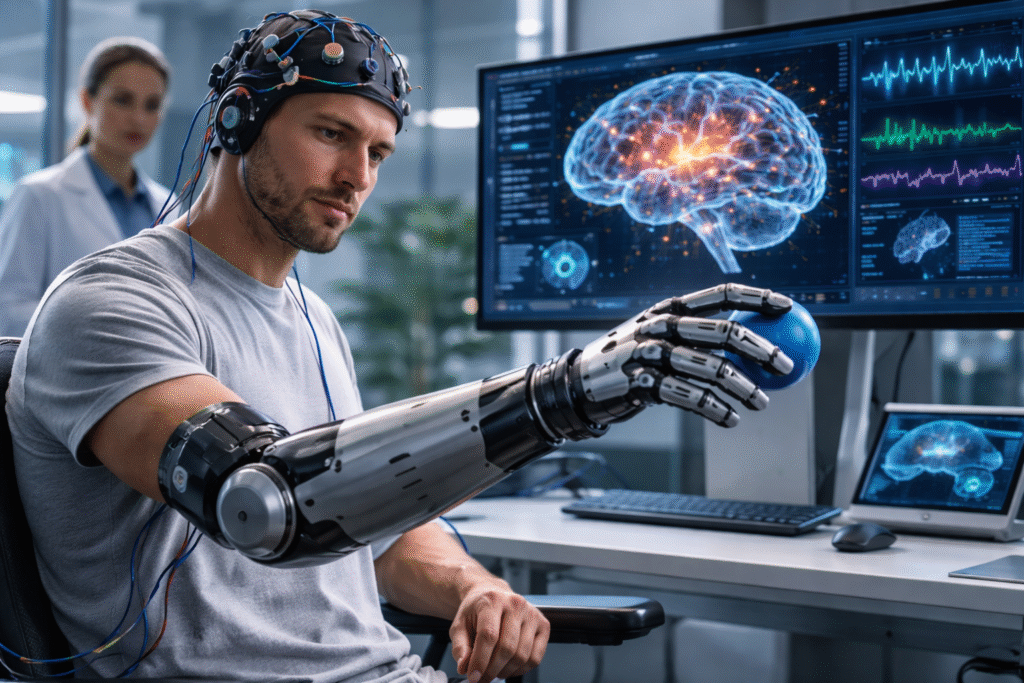
Artificial intelligence is vital in ensuring that brain-computer interfaces are more precise and effective. The signals of the brain are very complicated and, in most cases, may not be the same in every person; hence, they cannot be easily understood with the conventional approach of programming.
Machine learning algorithms accept millions of data points and adapt to detecting trends that will be related to particular actions or intentions. With time these systems become more efficient in reading brain signals, and BCI systems become quicker and more effective.
AI BCIs are capable of being personalized to an individual user as their neural activity is constantly learned. This adaptive learning enables users to gain greater control of the devices, enhancing the speed and usability of the devices. Inasmuch as artificial intelligence keeps developing, it will develop the ability of brain-computer interface technology to a great deal.
The widespread use of artificial intelligence beyond medicine.
Though medical use is still the main point in the research of BCI, the technology is slowly finding its way into other fields of innovation. Brain-computer interfaces are under discussion in technology companies and research institutions to enter the consumer electronics and digital environment.
BCIs may allow individuals to control computers, smartphones, and smart home gadgets in the future without having to touch computer monitors, smartphone screens, etc. The commands of thought might enable users to move around the online systems, command appliances, or even write by concentrating the mind.
Gaming and entertainment industries also want to take advantage of the BCI technology and develop more realistic virtual and augmented reality games. Games and simulations may react to the mental state of a user by interpreting the brain signals that are associated with attention, emotion, or intention.
Moreover, BCIs can be significant in the education sector, industry productivity, and cognitive controls, as they can assist people in comprehending as well as control their focus, stress, and cognitive functionality.
Ethical Issues and Data Protection.
In spite of the potentials that brain-computer interfaces promise to society, there are crucial ethical and privacy issues associated with the technology. Neural data is very personal, as brain signals may provide sensitive information on the thoughts, emotions, and state of mind of a person.
The specialists emphasize that there should be tight regulations and ethical principles in order to make sure that the neural data is gathered, stored, and utilized safely. The matters of data ownership, cybersecurity, informed consent, and transparency are to be undertaken with care as the BCI technology develops.
Governments and research and technology firms are collaborating to set up policies that safeguard the individuals and at the same time foster innovation in this new sector.
Conclusion
Brain-computer interfaces are a very strong nexus of neuroscience, artificial intelligence, and digital technology. Being allowed to connect human brains and machines directly, BCIs can revolutionize the healthcare sphere, make it easier to use, and redefine the interaction of people with technology.
The technology is yet to mature, but the development over the past few years proves the gigantic potential of technology. With further studies and ethical guidelines, brain-computer interfaces will possibly become a part of the human-machine ecosystem in the future.
It might be seen that the upcoming decades will see the beginning of a world where technology is under the control of thoughts that operate in harmony and allow new opportunities in communication, rehabilitation, and human ability.
Frequently Asked Questions (FAQs).
1. What is a Brain-Computer Interface?
A brain-computer interface is a technology that enables a person to communicate directly with external devices by sending neural messages directly as digital instructions.
2. What are the mechanics behind brain-computer interfaces?
BCIs are implanted with sensors or electrodes on the brain, process the signals with sophisticated algorithms, and then translate them into instructions, which then manage the computer or machine.
3. Do brain-computer interfaces pose any danger?
Non-invasive BCIs are relatively uncomplicated and do not need surgical intervention. Invasive BCIs are a form of surgical intervention that gives a more precise neural signal detection.
4. Who is going to be benefiting from BCI technology?
BCI-assisted technologies can be of great help to people with paralysis, neurological diseases, spinal cord injuries, and other severe motor disabilities.
5. What do Brain-Computer Interfaces hold in the future?
The future could also see the expansion of BCI applications to the daily technologies of the world, like gaming, smart houses, virtual reality, and the development of high-level human-computer interaction systems.