
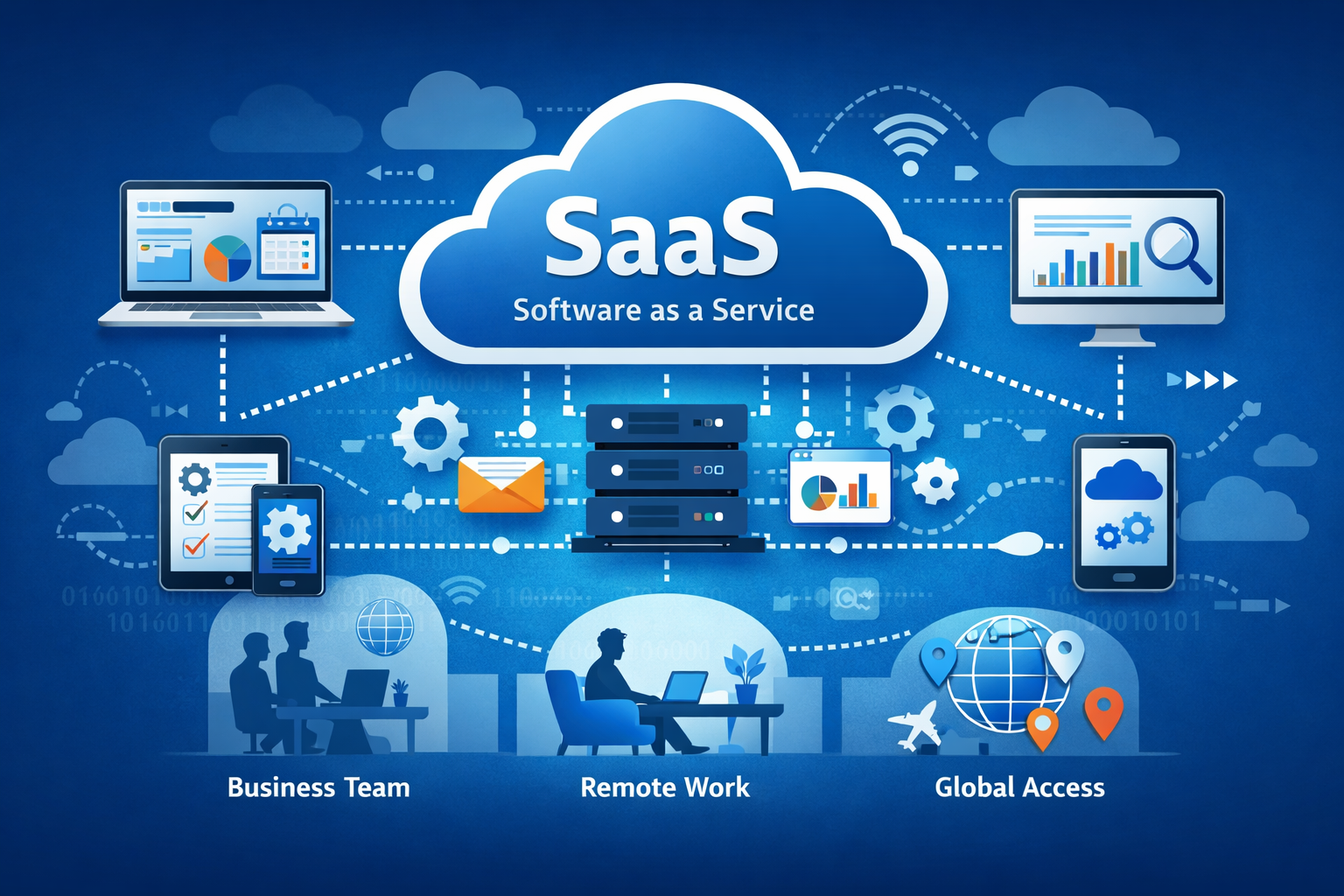
Due to the swift development of cloud computing, Software as a Service (SaaS) has emerged as one of the most common methods of software utilization in the business and individual environments nowadays. SaaS can be used instead of installing software on the personal computer or company servers, in which the user can directly access applications via the internet. The advantages of this new model of deliveries are that it makes it easy to manage software and lowers the costs as well as enhances accessibility for both large and small organizations.
With the digital transformation in all industries, knowledge of SaaS has become a necessity to businesses, entrepreneurs, and technology users who wish to remain competitive in the current digital world.
SaaS (Software as a Service) know-how.
SaaS, which is often referred to as Software as a Service, is a type of software distribution model that operates as a cloud service in which the service provider hosts the software in the cloud and makes it available to the user base online. Unlike when they have to buy some license and install software in some local system, users subscribe to the service and use it on the internet.
This method will not require complex installations, hardware architecture, and manual software upgrade processes. The SaaS provider does all the maintenance, updates, and security management.
Several widely used digital tools in our day-to-day lives, like email services, file sharing applications, customer management applications, project management applications, etc., are worked on with the SaaS model.
How SaaS Works.
SaaS is hosted on a cloud platform that is managed by the software vendor. The users can access the application via a web browser or mobile application, as the provider takes care of servers, databases, and software updates.
The majority of the SaaS services utilize a subscription pricing model where users are required to pay monthly/annual charges to access the software. This enables organizations to manage expenses and mast their use to their requirements.
All the services are hosted online, which means that the teams can use SaaS tools on various devices such as laptops, tablets, and smartphones. This scalability favors working at a distance, international cooperation, and real-time access to data.
Key Benefits of SaaS.
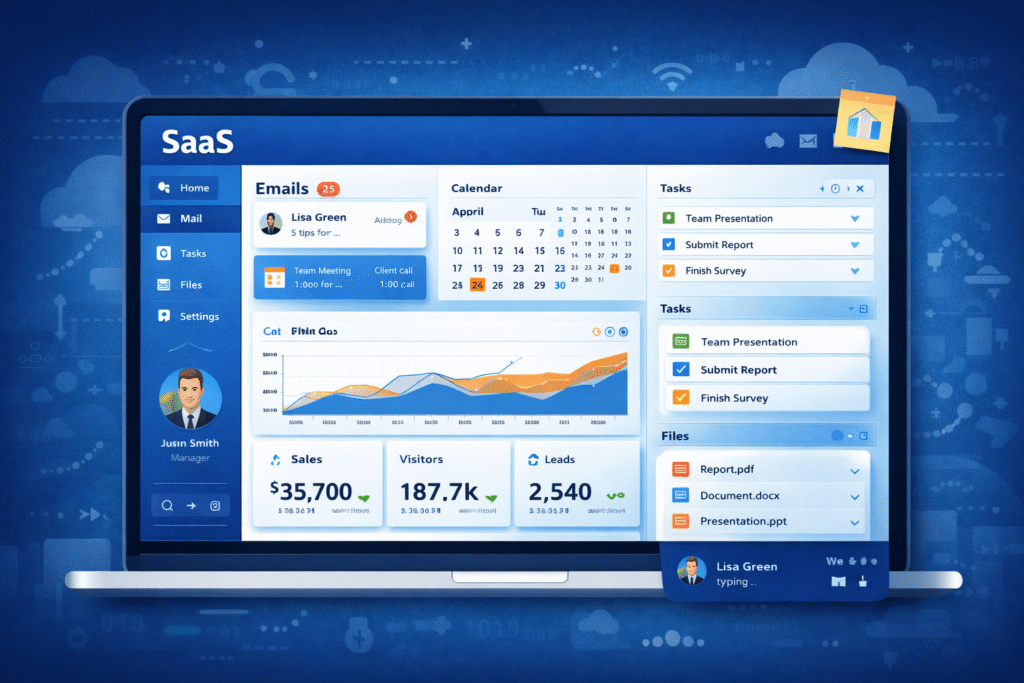
The popularity of SaaS has been achieved due to the high benefits it has on business and users.
Cost Efficiency
Classic software usually needs huge initial expenses on licenses, hardware, and IT maintenance. SaaS helps to reduce these costs, as the costs are provided through flexible subscriptions.
Easy Accessibility
SaaS can be accessed by the users at any point as long as there is an internet connection. This allows the remote workforce to work in harmony in various places.
Automatic Updates
Automatic updates are one of the greatest SaaS benefits. The software is constantly being enhanced, and new features are added by the provider as well as security problems fixed without the user having to do anything.
Scalability
A company can easily reduce or add its usage as per its needs. This renders SaaS perfect for expanding businesses and startups.
Faster Implementation
It is often not necessary to wait weeks to install and configure traditional software because SaaS applications may be used immediately after registration.
Typical Instances of SaaS Applications.
The SaaS technology is applied in numerous industries and business operations. Among the most widespread ones, there are the following:
Communication and collaboration tools.
These tools enable groups to interact, exchange files, and work together on the project simultaneously.
Customer Relationship Management Enterprise.
CRM applications assist companies in monitoring customer transactions and sales pipelines as well as enhancing customer service.
Project Management Software.
Project management SaaS solutions allow companies to allocate the work, track its status, and structure the work of the team.
Finance Software and Accounting.
The accounting solutions that are based on the cloud make it easier to invoice, track expenses, engage in financial reporting, and prepare taxes.
The tools are used to enable organizations to enhance efficiency and reduce technical complexity.
SaaS and Traditional Software.
SaaS and traditional software models have a number of major differences.
The conventional software has to be installed on the local machines and is often a one-time license purchase. Businesses should also deal with updates, maintenance, and security within themselves.
SaaS, on the contrary, is fully internet-based. The model is one whereby the user subscribes to the service, consumes it via a browser, and lets the provider take care of infrastructure, updates, and security.
This change of ownership into a subscription has enabled software to be more affordable and to be easily dealt with by many organizations.
SaaS Security and Reliability.
Security is one of the key factors that businesses that are using SaaS solutions consider. Top SaaS vendors invest a lot in sophisticated security technologies and infrastructure.
The standard security precautions would be to store data (encrypted), authenticate users through secure systems, have the system regularly monitored, and adhere to the global data protection standards.
Also, a majority of the SaaS providers have high uptime to protect their users against failure to access their applications whenever they require them.
The Future of SaaS
SaaS is an ever-growing industry as organizations are becoming cloud-first and digital. SaaS is also gaining popularity among businesses that are trying to enhance their productivity, optimize their workflow, and adopt remote work environments.
As artificial intelligence, automation, and cloud computing continue to develop, SaaS solutions will only grow stronger and become the more integrated part of the daily business processes.
Conclusion
Software as a service has changed the surge in the use of technology by individuals and organizations in the most fundamental ways. SaaS is more cost-effective because it provides software that does not require complex software installations, costly infrastructure, and ongoing maintenance.
This is due to its flexibility, affordability, and accessibility, which make it a perfect solution for businesses that are small and big alike, including startups and large companies. SaaS will keep driving innovation and efficiency in the digital world as the number of people who require cloud-based tools keeps increasing.
SaaS provides a viable and secure way for companies that need to enhance their productivity and embrace new solutions that are based on modern technology.
H2: Frequently Asked Questions (FAQ)
1. What does SaaS mean?
“SaaS” is an abbreviation that means “Software as a Service,” a cloud solution in which software is not installed on local computers.
2. Are SaaS applications to be installed?
The majority of the SaaS applications are not installed. They just need to be accessed using a web browser.
3. Is SaaS appropriate for small businesses?
Yes. If you are a startup or a small business, then SaaS is widely utilized due to its cheaper cost in terms of infrastructure and ease in dealing with software.
4. What is the difference between SaaS and traditional software?
Traditional software is deployed on the local systems and is supported by the user, whereas SaaS is supported by the provider hosted online.
5. Is SaaS secure to use?
Yes. Advanced security measures that are applied by reliable SaaS providers include encryption, authentication systems, and frequent security monitoring.