
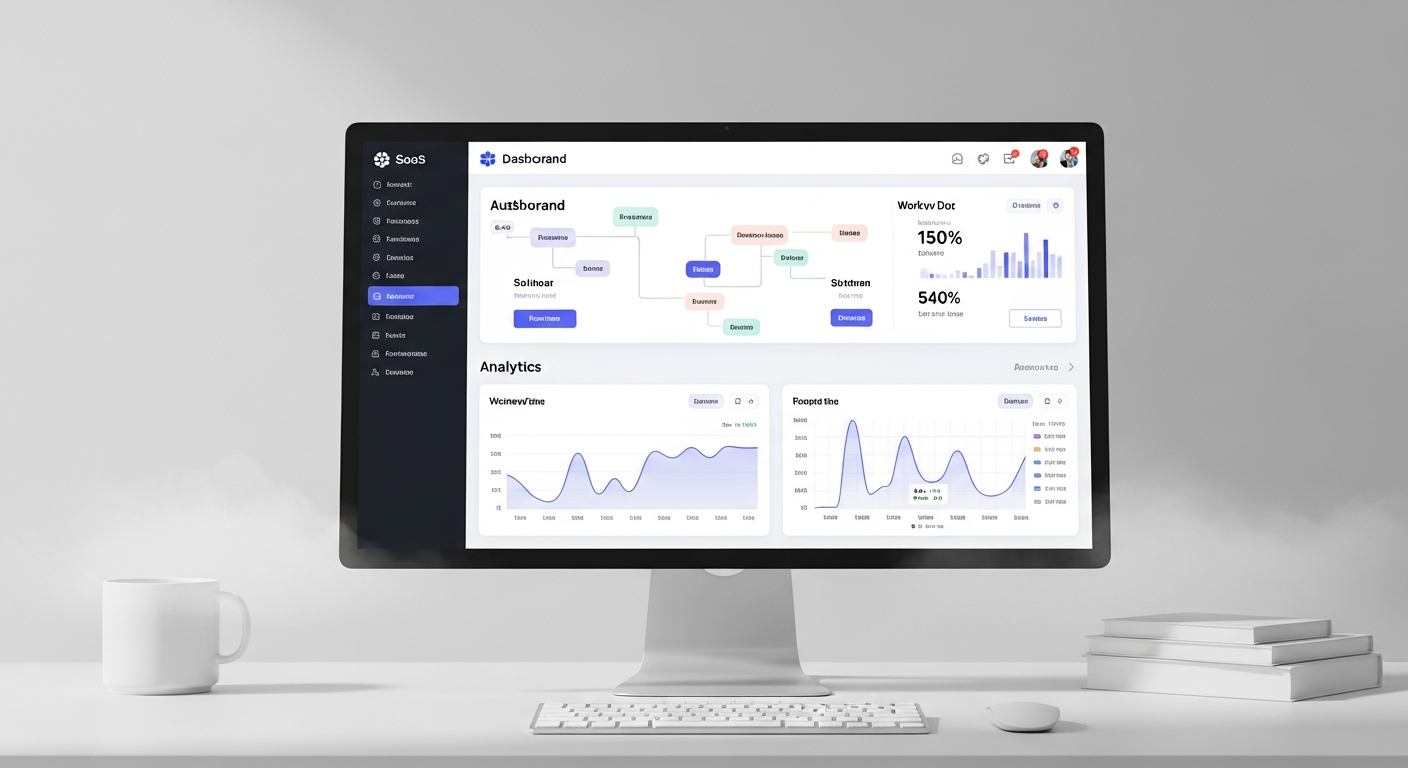
In 2026 the Software as a Service (SaaS) industry is seeing a large transformation with the introduction of AI native platforms. We see that as opposed to traditional SaaS tools which have required manual input and continuous management, what we have now are AI which operate autonomously, make decisions, and carry out tasks without human intervention. These platforms are also changing what we think of as productivity by which I mean they are doing away with the old way of manual processes and are instead bringing in more efficient and simple solutions. Also businesses are very much on board with this transition to the use of AI native SaaS as a way to keep up in the fast paced digital world. This change we are seeing is the start of a new age in which the role of software is that of an intelligent assistant rather than just a tool.
What is the AI designed SaaS platform model?
AI oriented SaaS platforms are software solutions which have AI at the base of what they do instead of it being an add on. These systems are designed to think, learn and act independently via machine learning, automation and real time data analysis. Unlike traditional SaaS which is very much dependent on user input, AI native platforms are able to predict results, improve processes and take action without human intervention. They improve over time via machine learning of data and user action which in turn makes them more adaptable, efficient and able to manage complex business functions.
H3: Main Features.
- Autonomous decision-making capabilities
- Real-time data processing and optimization
- Continuous learning and improvement
- Minimal human intervention required
How AI Informed SaaS Differs from Conventional Tools.
Traditional SaaS tools are passive in which they have the users input data, analyze results, and then it is up to the user to take action. On the other hand AI native SaaS platforms are proactive by the fact that they analyze data and execute tasks on their own. They identify patterns, predict trends, and improve workflows without waiting for directions. Also they reduce human error by automating repetitive processes. While traditional tools support users, AI native SaaS takes over many manual roles which they handle from start to finish. This base difference is what is causing businesses to shift towards AI powered solutions.
AI enabled SaaS Platforms.
Greater Productivity.
AI built into these platforms which in turn does what is routine for them to do that is, execute basic tasks out of the box. This in turn allows teams to put their energy into strategic play. Also which in turn sees to it that the teams’ focus is on the strategic as the platform takes care of the routine. Thus we see that there is an increase in speed of execution and in the overall efficiency.
Cost Cutback.
By eliminating the need for large teams and manual processes businesses see great cost savings. AI which handles multiple functions at the same time does not require extra resources.
Live Decision Making Process.
These platforms report back in real time and present actionable insights. Businesses which use them are able to make faster, more informed decisions.
Scale up.
AI built for the cloud our SaaS products scale without putting more strain on the team. We see smooth growth in data and process handling.
Better accuracy.
Automation also decreases mistakes from human error, which in turn provides more precise and dependability results.
Issues and Constraints.
Despite what AI has to offer, SaaS platforms which are at home in an AI world have issues. Chief among them is data privacy and security which seem to be an issue as these systems are very much into data processing. Also businesses which are making the transition from what they have been using which are traditional tools to AI based systems may find the process difficult. We also see that there is a risk of too much automation which in turn reduces human input which is an issue. Also the adoption of these AI native platforms may require large initial investments and technical know how. Businesses must put in place good adoption strategies to overcome these issues.
In 2026 we see this out to play as.
AI oriented SaaS solutions are a mainstay in many industries which are seeing a transformation of business models and value propositions. These platforms which put AI at the core of what they do are improving efficiency in many different areas. They are also excellent at analyzing data and acting on it in real time which makes them very effective in ever changing environments. In marketing and finance we see these AI native tools replacing legacy systems and simplicity which in turn is making operations easier. This wide scale adoption is an indicator of their great value in today’s business world.
Sales Automation.
AI designed SaaS platforms are transforming marketing by automating campaign management, audience targeting, and content creation. We see in real time the users’ behavior which in turn we use to improve campaign performance. This also reduces manual work and sees an increase in ROI.
Support Team.
AI which powers these platforms uses chatbots and virtual assistants for customer care. They give immediate responses and from each interaction they learn which in turn improves the service we provide to the customer also it reduces support teams’ load.
Economics and Accounting.
AI designed tools which are used for financial processes like invoicing, expense tracking, and reporting. We see accuracy, compliance and at the same time a great reduction in manual work. Also businesses are able to have real time insights which in turn helps them manage finances better.
HR and Personnel.
These platforms do the work of resume screening, setting up interviews, and analysis of candidate data. They improve on decision making and cut down hiring time. AI also plays a role in terms of employee engagement and performance tracking.
The Human Element in AI Powered SaaS.

Even in the age of autonomous software which has come to pass human input is still very much at the core of strategic decision making and oversight. AI does the heavy lifting in terms of execution but it is the role of man to steer, innovate and do what is right from an ethical point of view. We see professionals’ role as that of getting AI to fit in with business aims and values. Also we have in us the role of monitoring AI performance and making the needed adjustments. This is a partnership between man and machine which when done right produces a very effective workflow.
AI Based SaaS Trends.
In the future we will see that which AI native SaaS platforms do is they will focus on in depth automation, personalization and integration across systems. These platforms will become more intelligent which in turn will see them take on complex tasks with very little input. We will also see a great deal of hyper personalization which in turn will allow business to present very tailored experiences to users. Also we’ll note that AI will integrate with many different tools which in turn will create unified ecosystems. As tech evolves we will see AI native SaaS replace traditional tools and in the process will totally change how businesses operate.
Common Questions (CQ).
What does AI-native SaaS mean?
AI infused SaaS which is software that has artificial intelligence at the base of what it does, which in turn enables machines to make decisions and perform tasks autonomously.
What does it do that traditional SaaS doesn’t?
Traditional SaaS models require manual input whereas AI native SaaS does not; it performs tasks and makes decisions on its own.
Is AI a large component of your SaaS cost?
At first there may be higher costs, but in the long term we see reduced expenses.
Small businesses can use AI in SaaS.
Yes we see that which in turn improves the efficiency of small businesses and enables them to compete with larger companies.
What will the AI integrated SaaS look like going forward?
We will put focus on automation, integration, and personal user experience.